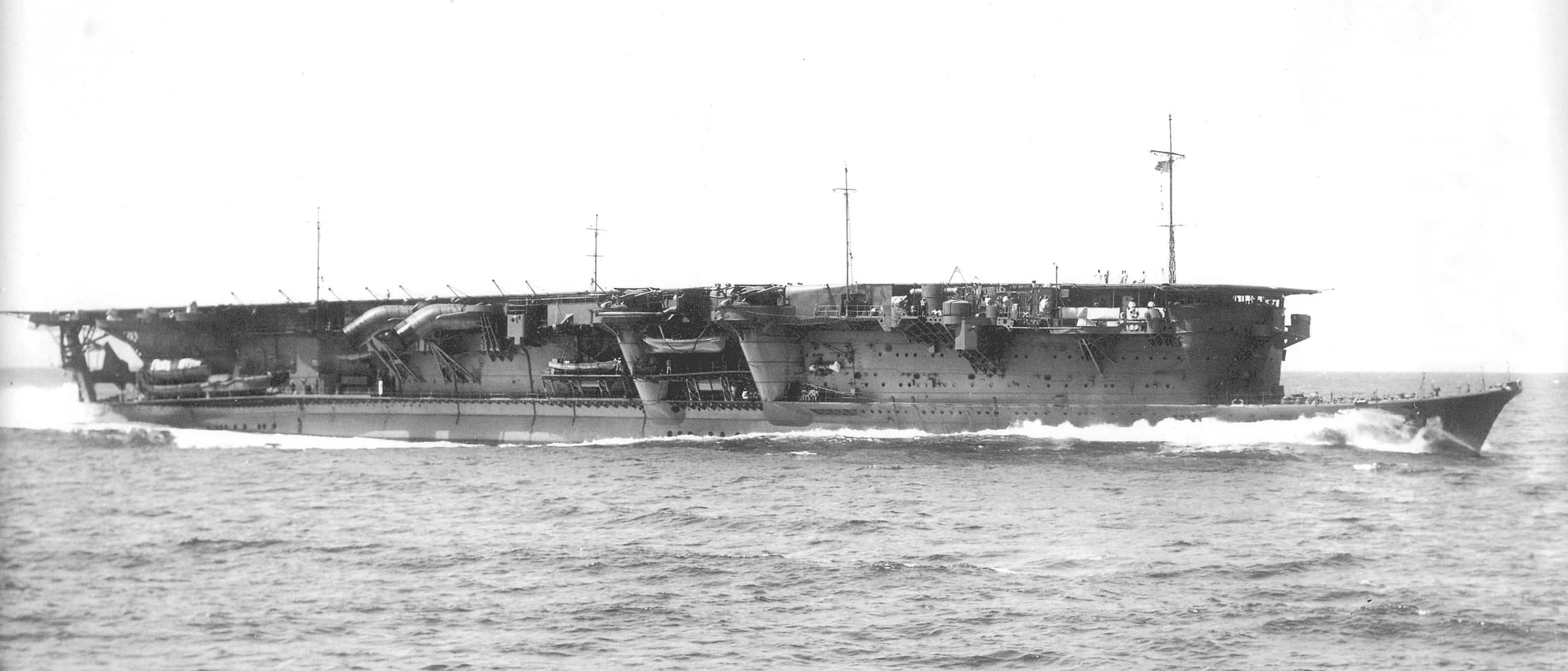

I found out recently in a chronology published by the Greater Visakhapatnam Municipal Corporation. The entry line was ‘Japanese war planes attacked Visakhapatnam in 1942’. My first reaction was embarrassingly simple. How had I never heard of this story?
I read it again.
I was born decades later in a small village near Visakhapatnam, South India. Until now, I had never connected my home with the war. To me, World War II belonged to Europe. Sometimes I used to wonder why it was called a world war in the first place.
The stories I heard seemed to involve only a handful of Axis and Allied countries. But when I learned that Japanese aircraft had attacked a place near my home, I began to wonder: had that attack affected my ancestors' everyday lives? Could that air raid, through some chain of consequences, be one of the reasons I was born? And how many people around the world alive today might never have been born if the war had not happened? I mean a causal connection to the war's disruptions, not a moral justification for them.
The attack happened on 6 April 1942. Visakhapatnam’s port was still very young; it had opened to ocean traffic in 1933. Local accounts drawn from Japanese and RAF records describe five aircraft coming across the Bay of Bengal towards the old lighthouse and St Aloysius School.
I kept the page open, and while reading I started imagining, trying to fill in everything that one sentence left out.
People ran for cover. Eight port workers were killed when a bomb exploded near a large pipe where they had sheltered. I keep getting stuck on that detail. Somebody looked at the pipe and decided it was the safest place available. It wasn’t. Another bomb reportedly struck the powerhouse, and the town went without electricity that night. The local government ordered an evacuation, shifted its offices, and closed the port.
The attack triggered a massive, immediate panic that entirely altered the daily routines of both urban citizens and nearby rural communities. The morning after the bombing, a mass exodus took place as nearly 50,000 residents fled the city in terror toward districts like Vizianagaram and Srikakulam.
This sudden evacuation led to the local economy and people’s lives being completely paralyzed; schools were closed, and Andhra University had to move its campus inland because its coastal buildings had been turned into military facilities. For those who remained, daily existence became severely limited due to the imposed war conditions. The Air Raid Protection regulations enforced a complete nighttime blackout, leaving the population in total darkness. Moreover, food supplies became scarce, as surplus resources were redirected to the Allied forces in cities, leaving locals with the opportunity to buy standard products with a special government-issued ration card.
For the small-town and village people living on the outskirts of Visakhapatnam, the attack brought different kinds of economic and social issues. As tens of thousands of urban refugees flooded into the countryside, small villages were suddenly overwhelmed by a massive refugee crisis that strained local water and food supplies. While the influx of people increased the demand for food, local agricultural production ground to a halt. Most of the village farmers abandoned their crops, fields, and livestock out of fear of further aerial bombings, leaving seasonal harvests to dry.
Furthermore, the British colonial military began seizing rural lands and coastal properties to quickly dig air raid trenches, set up anti-aircraft guns, and build concrete bunkers. This military occupation, combined with the constant blare of air raid sirens and forced civilian evacuation drills, shattered the peace of rural life and left small-town communities living in the psychological dread of a Japanese attack.
After reading that municipal record, I couldn’t keep treating the war as something that had happened safely far away. That’s when I began asking the question: if the war had never happened, would I have been born?
I mean exactly ‘me’, not another child carrying my name. One ejaculation contains millions of genetically different sperm. Conception depends on which egg is present during a short fertile window. If intercourse shifts by a few days, the result may be another person or no pregnancy at all.
At first I tried to exempt my own family. Surely our village was too remote, I told myself. But somebody didn’t need to see a Japanese aircraft to have their life redirected by the war. I can’t point to one event and say, “That is why I exist.” I have no letter about a delayed journey, no family story about a wartime meeting. Maybe every conception in my direct family line would have happened in the same way without the war, and I can’t rule it out. But honestly, the exact repetition of all those lives just seems unlikely to me.
World War II multiplied those changes beyond anything I can really picture. The United Nations places the world population’s two-billion mark around 1927. A little over a decade later, much of humanity had been pulled into war. Close to 70 million people died, depending on which indirect deaths are counted. The dead left gaps in families that hadn’t even been formed yet. Survivors came home late, or to the wrong place, or without the people they expected to find.
This changed how I heard the old question about a world without Hitler. Europe was already dangerous: the Treaty of Versailles had left resentment in Germany, the Great Depression deepened it, and militarism was growing. Antisemitism and fascism didn’t begin with one man. Experts say war might still have happened. Hitler wasn’t interchangeable with another German politician. His pursuit of Lebensraum in Eastern Europe was tied to his racial ideology, shaping where Germany attacked and what it did there. Without him, war might have come later, with different targets and different plans for extermination.
I don’t need to solve the whole counterfactual. A delay of one year changes when soldiers come home and when children are conceived. The population today might be similar, but it might not contain the same people.
That is why the art-school story stays with me. Hitler was rejected from the Academy of Fine Arts Vienna in 1907 and failed to gain admission. One acceptance letter wouldn’t have saved the twentieth century. But if his life had turned elsewhere, or his rise had been delayed, the chain reaching the present would have shifted.
This is the part I can’t get over. Hitler tried to control future generations through conquest and enslavement. The war he started instead scattered people beyond anyone’s control. Some children were never born; other births happened only because the world had been torn apart. That wasn’t the future he meant to create. That population may include me. I don’t mean that as gratitude. Nothing about my existence could make the killing and displacement worthwhile. What unsettles me is much simpler: a history I once thought belonged to distant countries may be part of the reason I am here.
I keep returning to the moment I saw Visakhapatnam in that municipal chronology. The line itself is flat: a place name beside a year. I can’t read it that way now. I picture the aircraft coming over the surf. Mostly, though, I think about the workers who chose the pipe because they believed it would protect them. The town lost power that night, and after that came changes no municipal chronology could record. Somebody stayed away longer than planned. Somebody else took work in a place he had never expected to live.
Maybe one of those small changes reached my family. I will probably never know.
We can count the war’s dead, at least roughly. We can’t count the people who were never conceived because history went this way instead of another. Before I found the Visakhapatnam entry, those missing people were only an idea to me.
Now I sometimes wonder whether, in another history, you and I are the missing persons.
Explore the evidence
Sources and further reading
These references support the historical context. The discussion of my own existence is a personal counterfactual, not a documented account of my family history.